Submissions are open for our two-day conference ‘What does a good digital society look like?’ on 10 & 11 June 2027, at Sheffield Hallam University, UK. Submit your abstract or proposal by 29 October 2026.
Are you a researcher with ideas about how to improve our digital worlds, now and in the future? If so, please join us at What does a good digital society look like?, a two-day conference in Sheffield, UK, on 10th and 11th June 2027.
We invite proposals for papers, panels and workshops from researchers from any discipline and stakeholders from any sector who are interested in coming together to talk about the digital society in which we want to live.
We welcome different types of presentations, including theoretical, empirical, and methodological research papers, works-in-progress, practice-based work, and other kinds of contributions.
We invite proposals that respond to the following themes and other topics:
- Ways to improve specific aspects of our digital worlds
- Equity, fairness and overcoming biases in a better digital society
- Environmental sustainability in a better digital society
- Collective wellbeing in a good digital society
- Digital technologies and societal/psychological resilience
- Theories, concepts and methods for imagining a better digital future
- Radical, anti-colonial, global majority and indigenous visions of a good digital society
- Politics and the digital good, including digital goodness washing
- The perspectives of specific groups and communities on the digital good
- Values for a good digital society
- Evaluating the digital good
- Human-centred design as empowerment
- Methods for building more equitable technologies, eg that function well in low-resource languages and in diverse cultures and contexts.
Keynote speaker

We are delighted to announce that Professor Ruha Benjamin, transdisciplinary scholar, writer, educator, and cultural worker, and Professor of African American Studies at Princeton University, will give the keynote address at the conference. Her work is a major source of inspiration for our own, especially her (2019) invitation to:
Remember to imagine and craft the worlds you cannot live without, just as you dismantle the ones you cannot live within
She is also Founding Director of the Ida B. Wells JUST Data Lab, and author of four books, Imagination: A Manifesto (2024), Viral Justice (2022), Race After Technology (2019), and People’s Science (2013), and editor of Captivating Technology (2019).
Plenary speakers include:

Jean Burgess, Distinguished Professor of Digital Media, Queensland University of Technology and Associate Director of the Australian Research Council Centre of Excellence for Automated Decision-Making and Society

Rachel Coldicutt OBE, Founder and Executive Director of Careful Industries

Susan Halford, Professor of Sociology, University of Bristol and Director of the ESRC Centre for Sociodigital Futures

Shakuntala Banaji, Professor of Media, Culture and Social Change at The London School of Economics and Political Science (LSE)

Jonathan Corpus Ong, Associate Professor of Global Digital Media at UMass Amherst
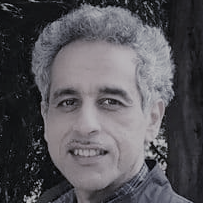
Sanjay Sharma, Associate Professor at the Centre for Interdisciplinary Methodologies, University of Warwick.
Details
When: Thursday 10 and Friday 11 June 2027
Where: Sheffield Hallam University, UK
Participation fee: £150 full fee / £100 for PhD students or those without institutional support. The fee covers conference attendance, refreshments and lunches during the event and an evening reception on the first day. Travel, accommodation and evening meals are not covered.
About the conference
The Digital Good Network and this conference are in dialogue with the growing vein of scholarship that challenges us to imagine more desirable (digital) futures, like Ruha Benjamin’s work, Payal Arora’s (2024) From Pessimism to Promise, and scholarship on hope such as Bregman’s (2020) Humankind: a hopeful history and Van Der Lugt’s Hopeful Pessimism (2025). These works, in one way or another, call on us to take imaginings of better futures seriously, as spaces where the future gets shaped. They urge us to move from the question ‘what digital society don’t we want?’ to ‘what kind of digital society do we want, and how do we get there?’
We invite proposals for papers, panels and workshops from researchers and stakeholders from any discipline or sector who are interested in coming together to think about the digital society in which we want to live. We welcome different types of presentations, including theoretical, empirical, and methodological research papers, works-in-progress, practice-based work, and other kinds of contributions.
Of course, notions of a good digital society are contested. When asking what a good or better digital society looks like, we need to ask good for whom? and who gets to decide?. We need to ask whether, and in what conditions or power relations, it is possible to achieve the digital good, especially given that disadvantaged, marginalised and minoritised groups are often not included in conversations about these questions.
How to apply
We invite:
- traditional conference paper submissions: with an abstract of 250 words;
- panel submissions: with a predefined set of confirmed speakers: 150 word abstracts for each paper plus an overarching, 250 word panel abstract;
- workshop submissions: with an abstract of 400 words, to include the theme, activities, and practical requirements;
- submissions for creative formats: with an abstract of 250 words and up to four accompanying images.
Please download the application form and submit your proposal via email to applications@digitalgood.net by 29 October 2026. Notifications of acceptance will be sent by mid December 2026.
Fee waivers
To support diverse participation at this event, the Digital Good Network will offer up to five conference fee waivers to participants who have had papers accepted via the peer review process. These awards are designed to assist scholars and researchers who would otherwise face financial barriers to attending. To ensure that fee waivers go to those most in need, we kindly request that you make every effort to secure funding outside of this award if possible.
Applications for fee waivers will open after acceptances have been announced.
We will ask you to write up to 300 words in support of your application. You may, for example, explain the circumstances you are in, and how your contribution to the conference will bring a distinctive, underrepresented perspective.
Timeline
Launch: July 2026
Deadline: 29 October 2026
Notification of decisions: By mid-December 2026
Registrations open: Mid-December 2026
Registration closes: Friday 30 April 2027
Organising committee
Ros Williams, Gina Neff, Shaoying Zhang, Vimbai Chapungu, Arathy Sb.
For questions and more information, please contact info@digitalgood.net.